Tankless Water Heater Repair in Great Neck, NY
When you call for tankless water heater repair in Great Neck, NY, you talk to someone who knows these heaters: what your code usually means, what fixing it tends to cost, and when a tech can get there.
- Fault log checked first
- You approve the price before work
- Descaling through isolation valves
Diagnosis before parts
We confirm what failed by testing it, so you never pay for a guess or a part that wasn't needed.
You approve the cost
The repair and its price are spelled out on paper, and work begins only after you say yes.
Technicians near you
The person at your door works your area and repairs on-demand heaters week in, week out.
Only tankless repair
No tank heaters, no remodels. Gas and electric on-demand units are the whole job.
What Great Neck Does to a Tankless Heater
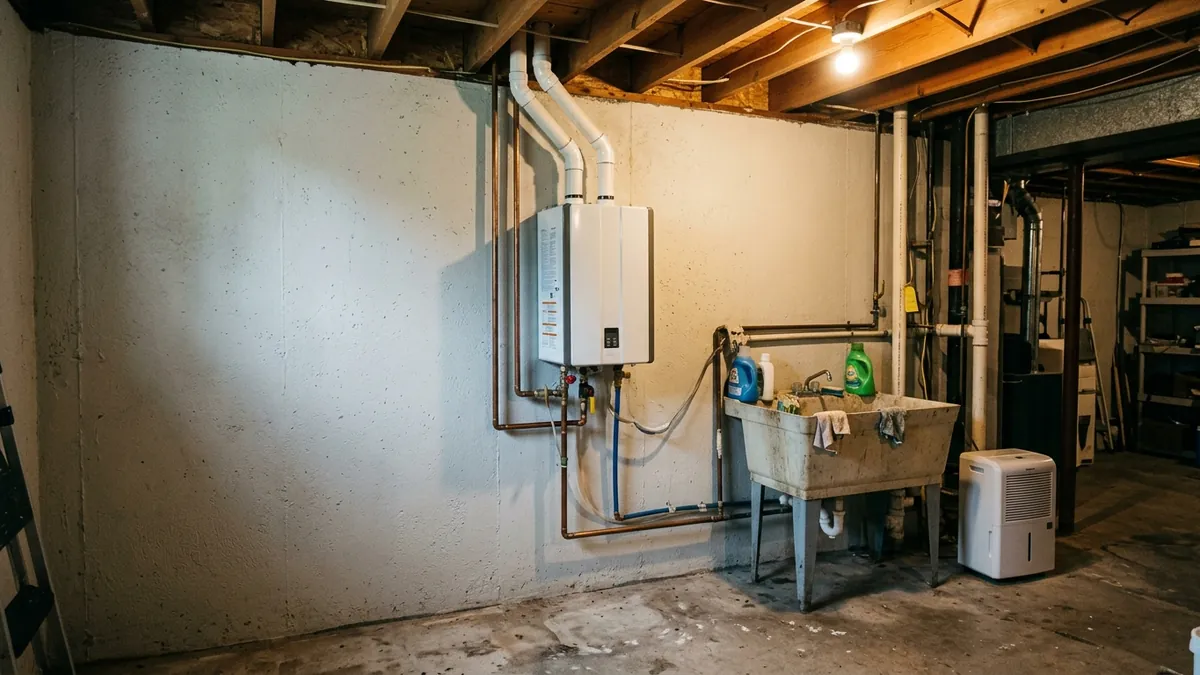
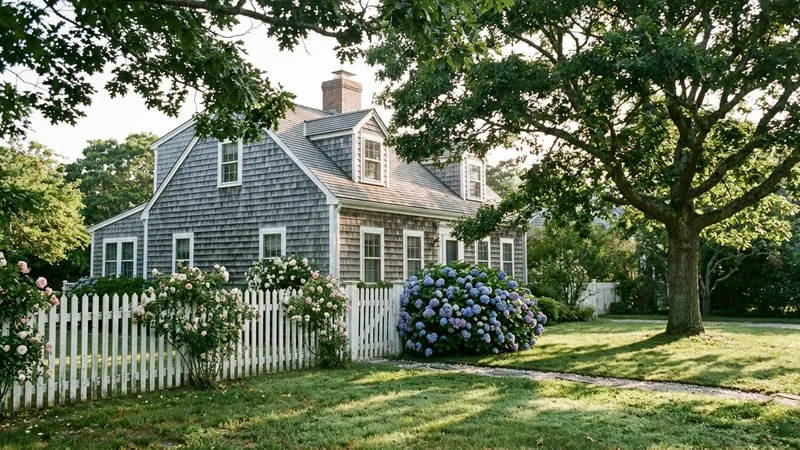
Capes and raised ranches make up much of Great Neck; the heater is usually down in the basement or out in the garage, with a sidewall vent. Most trouble here comes from winter storms or the condensate line.
Local factors in Great Neck
- Basement heaters. Basement installs are typical locally, often condensing heaters that send acidic condensate to a lift pump or straight into a floor drain.
- Snow-blocked vents. After a heavy storm, one of the first suspects for lost hot water is an intake or exhaust pipe sitting under fresh snow.
We cover all of Great Neck, including ZIP codes 11020, 11021, 11022, 11023, 11024, 11026, 11027.
Call (888) 987-0567Tankless Trouble We See in Great Neck
Most tankless water heater repair in Great Neck, NY calls trace back to one of the faults below, and the code on the panel usually narrows it down.
No-ignition code (11, E003, 111)
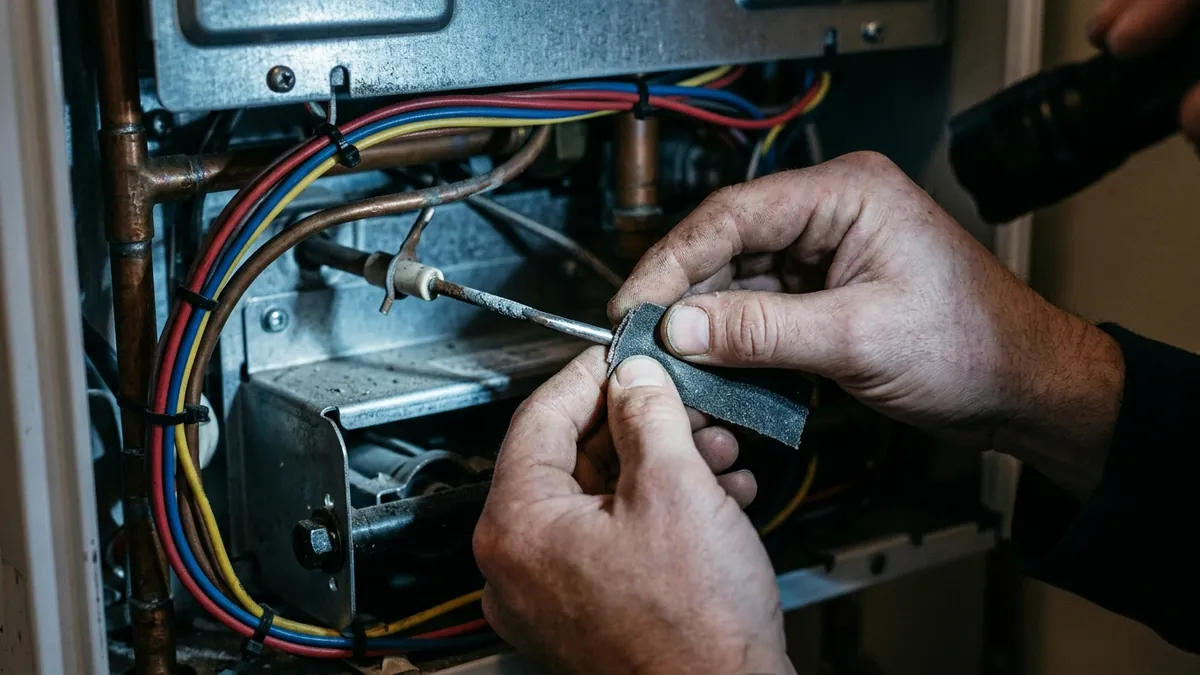
Clicking with no flame means something in the gas, ignition or vent path is off. We work through all three.
Dripping from the cabinet
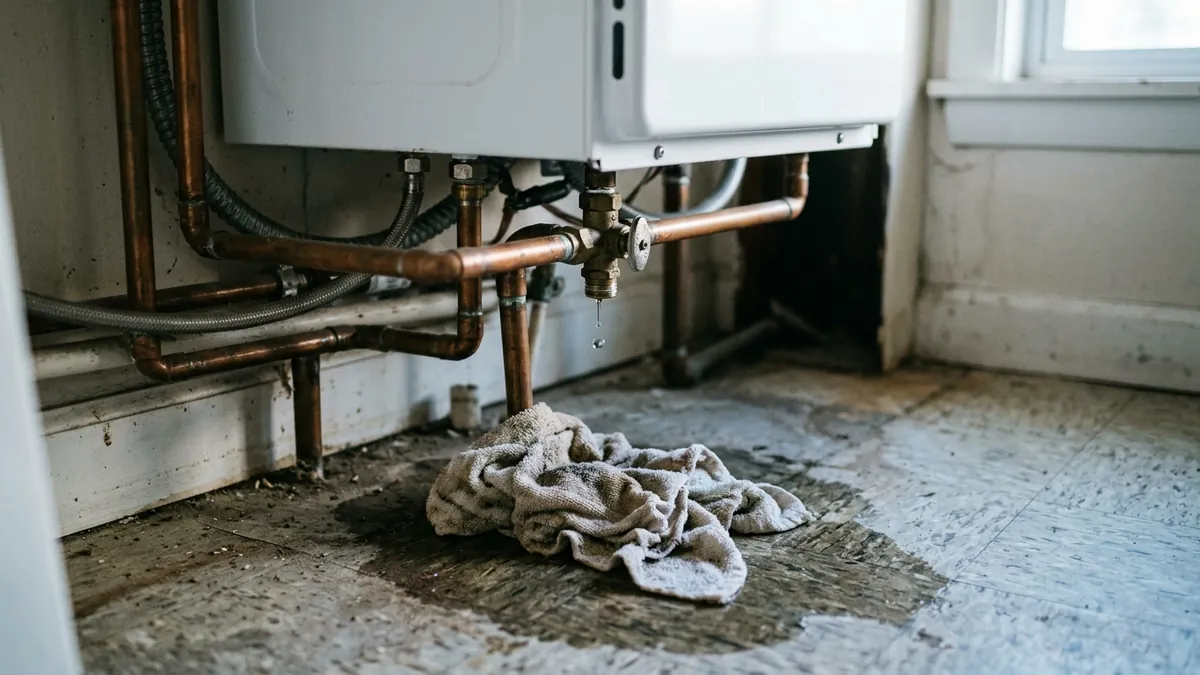
Leaks start at service valves, pipe joints, the pressure relief valve, the condensate drain or a cracked exchanger.
Code 10 or E110 on the panel
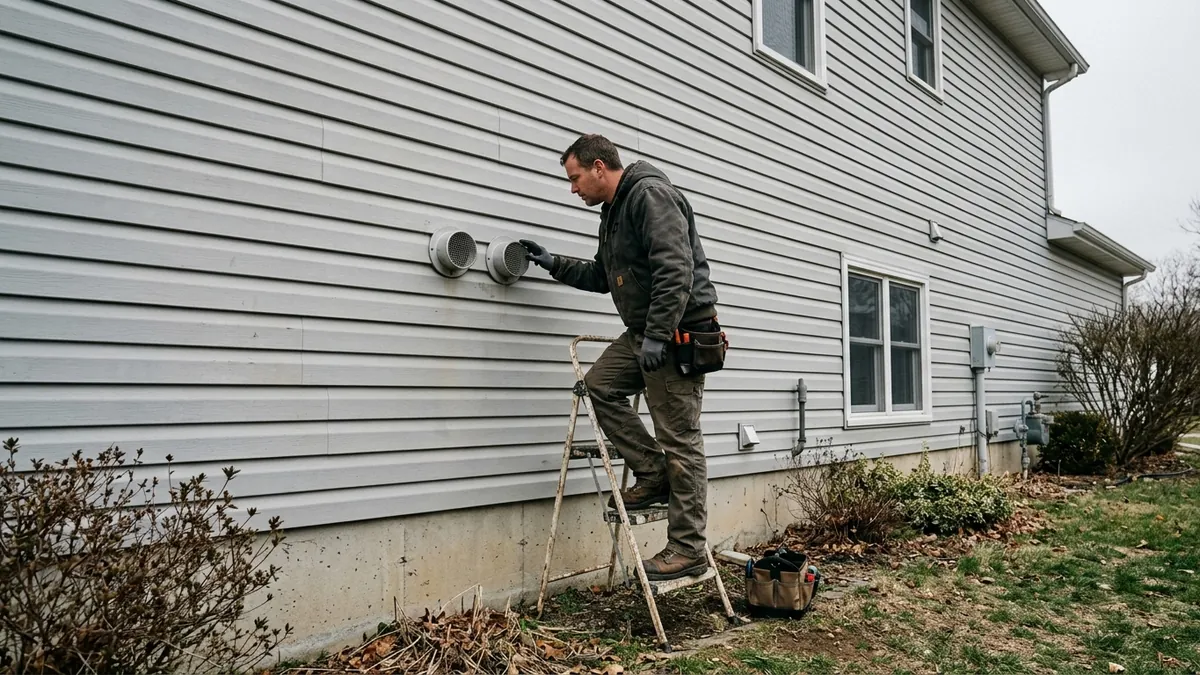
A venting code means the heater can't move air: a blocked cap, a bird or wasp nest, drifted snow or an overlong vent.
Rinnai showing LC
That's the scale warning. The exchanger is due for a descale, and it shouldn't wait long.
Nothing on the display
The outlet has lost power, a fuse has blown, or the control board has failed.
Whistling or rumbling
Mineral scale, a laboring fan or a gas regulator problem, all of which testing will reveal.
Not sure which of these it is? Describe the symptoms on the phone and we'll tell you what it most likely is.
Keep It Running or Replace It in Great Neck?
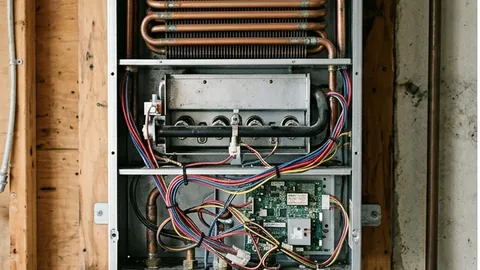
A gas tankless heater that gets regular flushes often keeps going for two decades or more, so one bad part almost never justifies a new unit. Once a heater is past 15 years and its exchanger fails without warranty coverage, replacement starts to make more sense.
Can't decide? Phone (888) 987-0567 with the make, the manufacture date from the rating label and the code. We'll tell you whether fixing it is worthwhile before any visit is booked.
Call (888) 987-0567What a Tankless Fix Costs in Great Neck
Most tankless water heater repair in Great Neck, NY comes to an estimated $150–$800 including parts and labor. The exception is a heat exchanger, which runs an estimated $1,000–$2,500.
Diagnostic visit
- Inlet screen, flow rate and vent inspected
- Clear explanation of what broke
- Label age and serial recorded
Component repair & descale
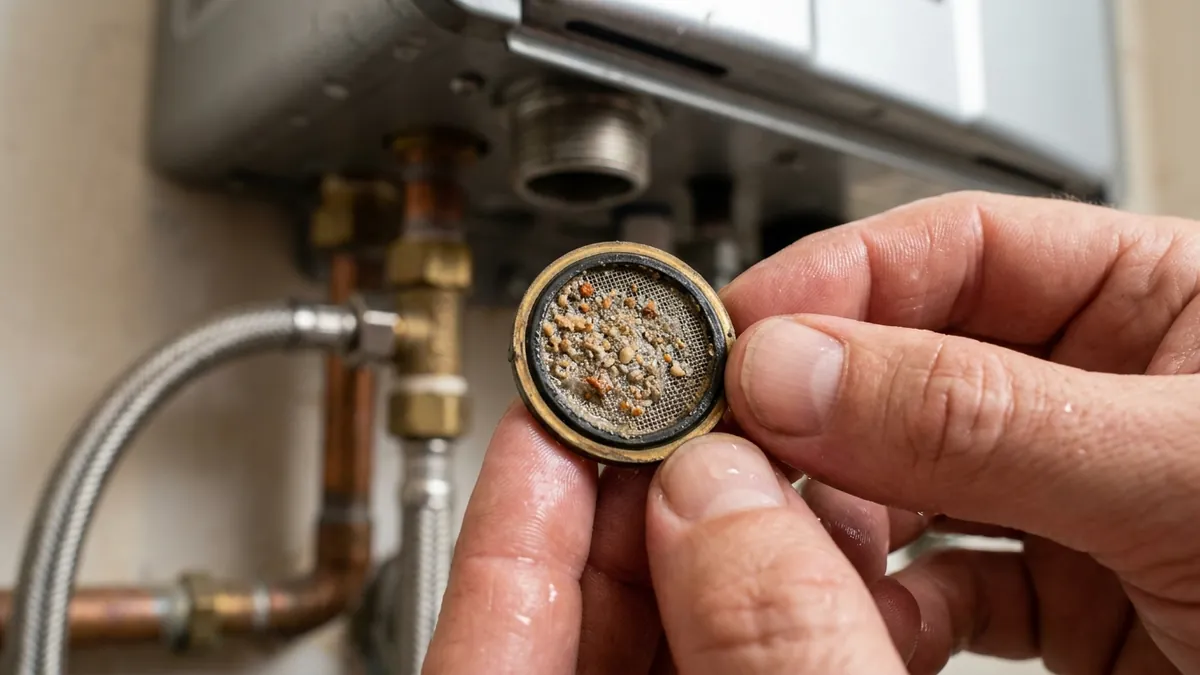
- Inlet screen rinsed clean
- Service valves fitted for future flushes
- Exchanger flushed with descaling solution
Exchanger & major components
- Straight talk when the unit isn't worth fixing
- Maker's parts warranty checked first
- Combustion and temperature verified
Book Tankless Water Heater Repair in Great Neck, NY Now
If the same code returns every time you reset, the heater is telling you it needs a real diagnosis.
Housing in Great Neck at a Glance
Great Neck leans on gas, with roughly 85% of households heating with it. Where gas lines are that common, gas tankless models are probably the norm, and their usual trouble spots are ignition, supply pressure and the flue. Half the housing here predates 1952, when homes were piped and vented for tank heaters; a tankless unit added later often needed a larger gas line, a new vent path or a condensate drain, and those add-ons are frequent starting points for a fault. Roughly 71% of homes are lived in by their owners and about 68% are single-family houses, so the person reporting a tankless problem here is usually the one who approves the fix.
At roughly 8,385 people per square mile (about 11,068 residents on 1.3 square miles), Great Neck is densely built, with a good share of attached and multi-unit homes where a tankless heater may hang in a cramped closet. Our New York coverage list has 300 communities, and this one is number 105 among them by population.
Figures: 2019-2023 five-year American Community Survey estimates for Great Neck, NY, published by the Census Bureau.
Great Neck Weather and Water Temperature
Winter here is long: roughly 105 nights a year drop to freezing or below, and the lowest reading in the past three years was about 0°F. Condensate traps, supply stubs in unheated spaces and vent caps are the usual victims, so a tankless unit in Great Neck deserves a close look before the cold sets in.
In Great Neck the cold tap is probably around 43°F in winter and 65°F in summer, based on a January average of 31°F, a July average of 77°F and a yearly average of 54°F. Heating that water to 120°F takes a rise of about 77°F in winter, so a 199,000 BTU gas unit at 90% efficiency tops out near 4.6 gallons per minute, compared with roughly 6.5 in summer when the rise is only about 55°F.
For comparison, a shower draws roughly 2 gallons per minute, so two at once plus the dishwasher can pass the winter figure. If the water goes lukewarm only when several taps run, the unit is likely maxed out; if it goes lukewarm at one tap, the cause is more often scale, a flow sensor or the flame.
Weather: NASA POWER daily temperatures, 2021-2023, for the grid cell around Great Neck, NY, corrected to the town's elevation (USGS). Tap-water temperatures and flow rates are estimates, not measurements.
ZIP Codes We Cover in Great Neck
We cover all of Great Neck, including ZIP codes 11020, 11021, 11022, 11023, 11024, 11026, 11027.
- 11020
- 11021
- 11022
- 11023
- 11024
- 11026
- 11027
Close-by cities
Tankless Water Heater Repair in Great Neck, NY: FAQs
Still unsure?
Phone us and describe what the unit is doing. A tankless tech can usually narrow it down while you are on the line.
Call (888) 987-0567What does tankless water heater repair in Great Neck, NY cost?
Depending on which part failed, most repairs run an estimated $150–$800. Expect an estimated $150–$350 for a stand-alone descale and an estimated $1,000–$2,500 for a replacement heat exchanger. Whatever the repair, you approve the price on paper before any work starts.
Why won't my tankless water heater turn on?
First make sure the outlet has power and the gas valve is open. If both check out, look at low flow, a plugged inlet screen, a bad flow sensor or trouble in the ignition circuit. In Great Neck, after a hard freeze also check whether the condensate line has frozen, since many condensing models shut down when it blocks.
What is the typical lifespan of a tankless water heater?
Gas units that get regular flushes often last two decades or more. Electric models usually manage somewhere around 7 to 10 years of service. In Great Neck the heat exchanger works through a rise of about 77°F on a typical winter day, which is why flushing on schedule matters there.
Can a broken tankless water heater be fixed?
Usually, yes. Flow sensors, igniters, thermistors, flame rods, blowers, gas valves and control boards can all be swapped, and mineral scale can be flushed out. The main exception is an older unit whose heat exchanger leaks.
Schedule Tankless Repair in Great Neck
Booking usually takes one quick call to (888) 987-0567; keep the model number and the display reading handy.
Speak With a Tankless Tech in Great Neck
Around Great Neck
ZIP codes 11020, 11021, 11022, 11023, 11024, 11026, 11027, and the surrounding parts of Nassau County.
Browse New York