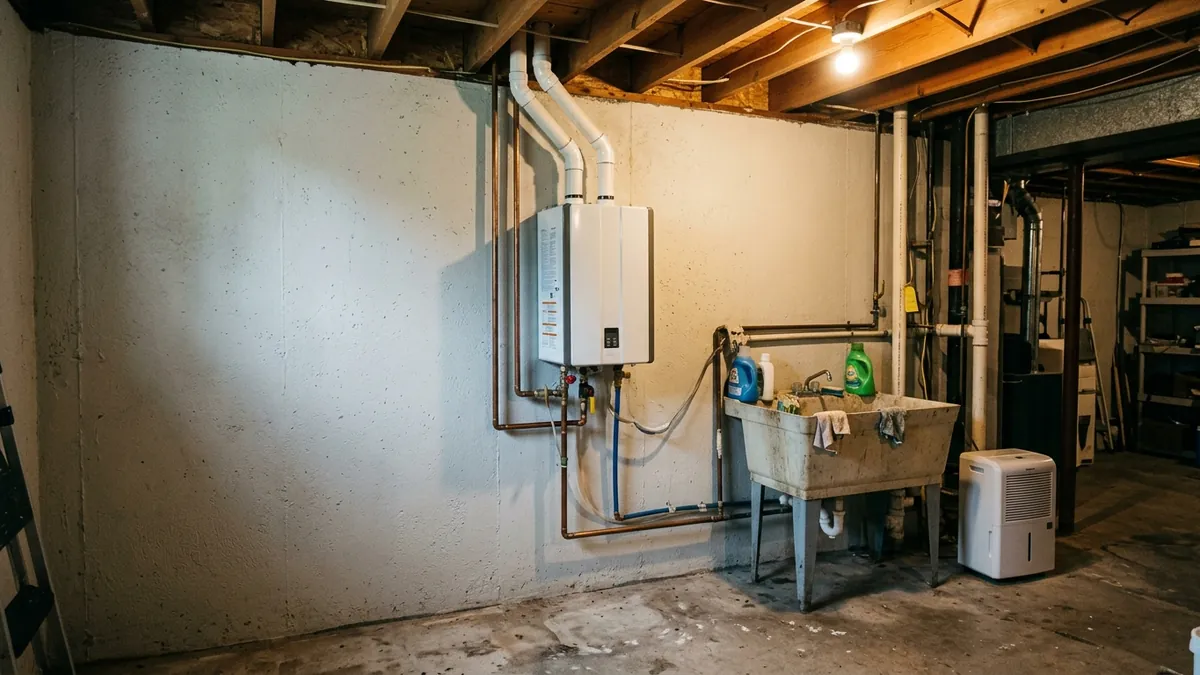
Tankless Water Heater Repair in Richmond, IL
Shower gone cold and a number blinking on the panel? Call about tankless water heater repair in Richmond, IL, describe what you're seeing, and we'll tell you what's probably wrong and what it should roughly cost, right on that call.
- Gas and electric models
- Descaling through isolation valves
- Every hot tap tested at the end
Diagnosis before parts
We confirm what failed by testing it, so you never pay for a guess or a part that wasn't needed.
You approve the cost
The repair and its price are spelled out on paper, and work begins only after you say yes.
Technicians near you
The person at your door works your area and repairs on-demand heaters week in, week out.
Only tankless repair
No tank heaters, no remodels. Gas and electric on-demand units are the whole job.
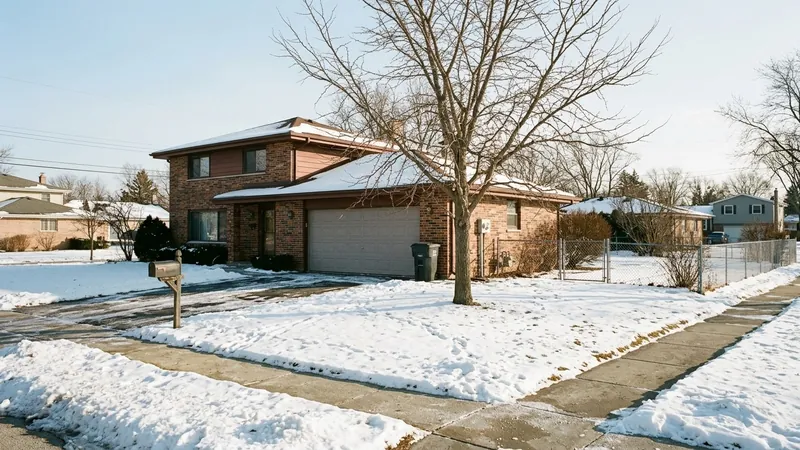
What Richmond Does to a Tankless Heater
In most Richmond homes the tankless sits in the basement near a floor drain. Hard winters, hard water and snow piled against the vent each take a toll.
Local factors in Richmond
- Basement heaters. Lots of heaters here sit in the basement, vented with PVC through the rim joist, and their condensate needs a proper place to drain.
- Snow-blocked vents. Drifted snow against a sidewall vent will shut a heater off with a vent code until someone digs out the termination.
- Mineral-heavy water. Each month of hard water adds another thin layer to the exchanger, so plenty of repairs in this area wrap up with a descale to keep the fix from slipping.
Service reaches across Richmond (60071) and into neighboring areas of McHenry County.
Call (888) 987-0567Tankless Trouble We See in Richmond
Nearly every request for tankless water heater repair in Richmond, IL starts with a symptom on this list and finishes with a single replaced component or a flush.
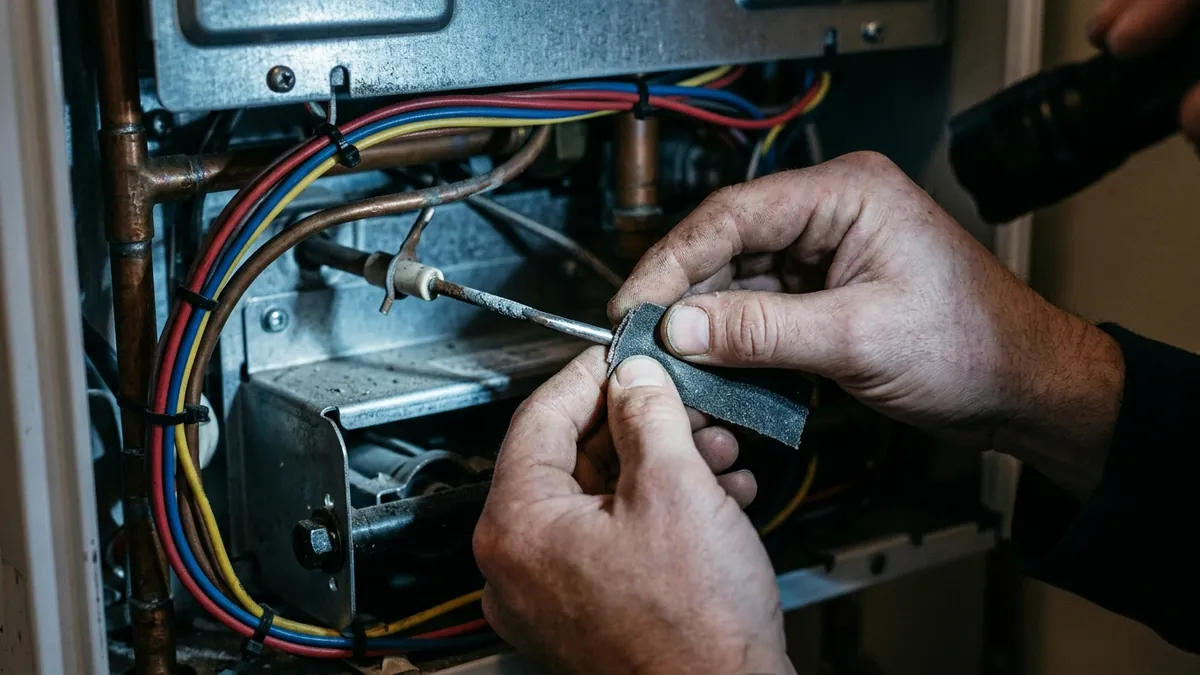
No-ignition code (11, E003, 111)
A no-ignition code points to low gas pressure, a sooted flame rod, a tired igniter or a vent obstruction, and we test each.
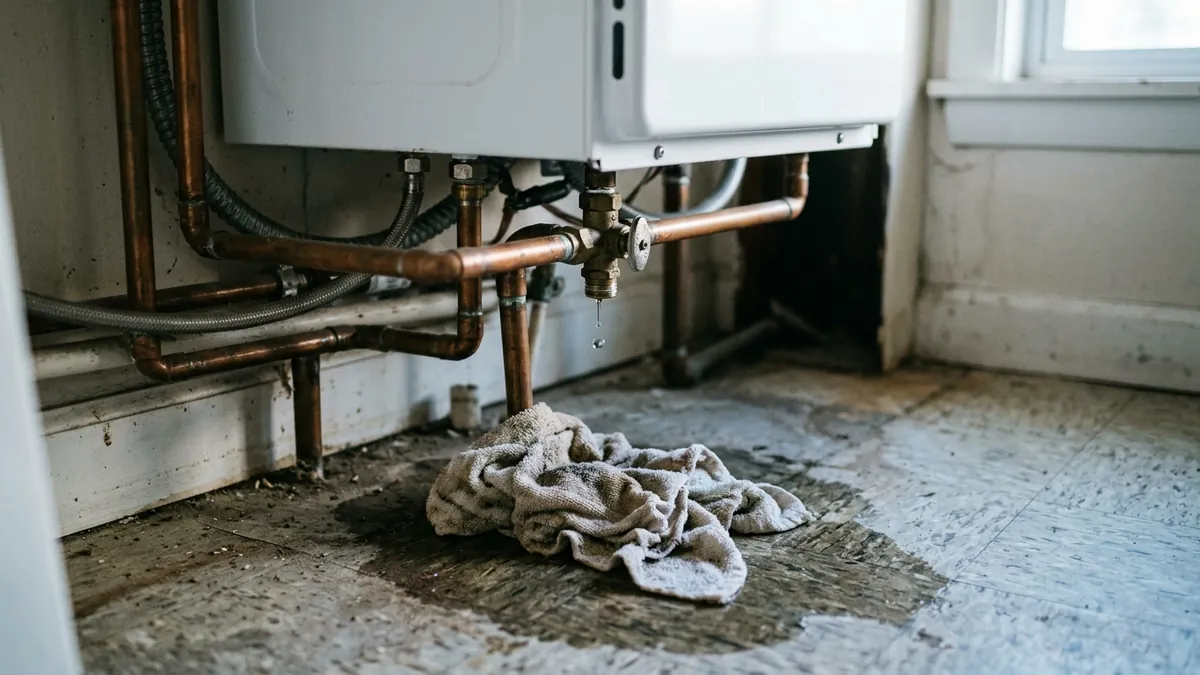
Puddle below the heater
Leaks start at service valves, pipe joints, the pressure relief valve, the condensate drain or a cracked exchanger.
Code 10 or E110 on the panel
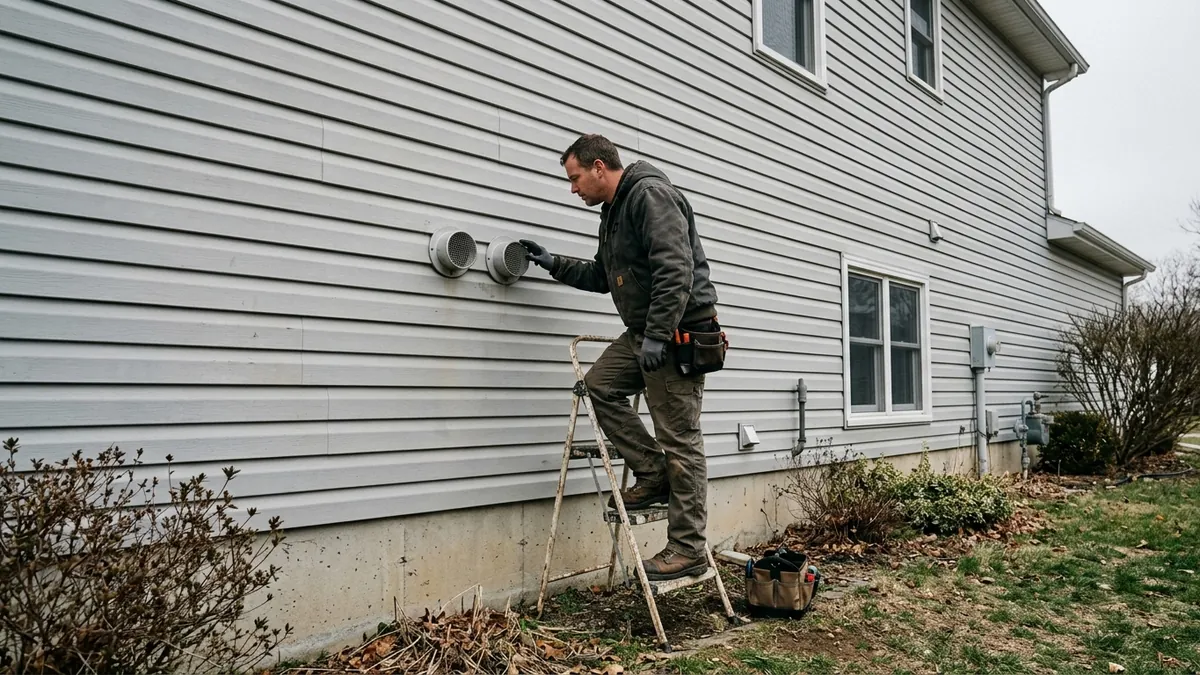
A venting code means the heater can't move air: a blocked cap, a bird or wasp nest, drifted snow or an overlong vent.
Nothing on the display
The outlet has lost power, a fuse has blown, or the control board has failed.
No hot water after a freeze
A supply line froze, or the heater lost electricity and its freeze protection with it.
Same code after every reset
Resetting hides the symptom for a while. A recurring ignition or exhaust code needs a technician.
Not sure which of these it is? Describe the symptoms on the phone and we'll tell you what it most likely is.
Keep It Running or Replace It in Richmond?
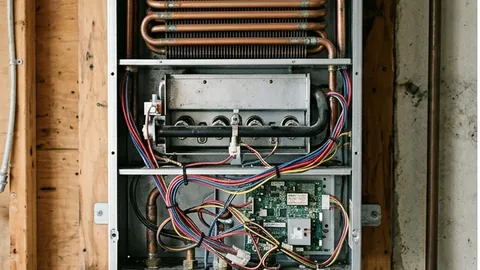
For the vast majority of faults, repair is the answer. The math only tips toward a new heater when an out-of-warranty exchanger has failed, or when an electric model is close to the end of its shorter service life.
Grab the model and serial numbers from the rating plate and ring (888) 987-0567. Age plus symptoms is usually enough to settle the repair question over the phone.
Call (888) 987-0567What a Tankless Fix Costs in Richmond
Most tankless water heater repair in Richmond, IL comes to an estimated $150–$800 including parts and labor. The exception is a heat exchanger, which runs an estimated $1,000–$2,500.
Diagnostic visit
- Intake and exhaust caps inspected
- Inlet screen, flow rate and vent inspected
- Fault codes and log reviewed
Component repair & descale
- Exchanger flushed with descaling solution
- Flow sensor diagnosed and replaced
- Every hot tap tested after the fix
Exchanger & major components
- Blower motor replaced
- Straight talk when the unit isn't worth fixing
- Cracked or leaking exchanger swapped
Get Tankless Water Heater Repair in Richmond, IL Today
If the same code returns every time you reset, the heater is telling you it needs a real diagnosis.
Housing in Richmond at a Glance
Space heating in Richmond is mixed, roughly 54% gas and 45% electric, so a tankless repair visit here could involve either a gas-fired or an electric model. With half of Richmond homes built before 1991 and half after, tankless heaters here range from recent swaps to units that have run long enough for sensors, fans and igniters to wear. Owner-occupied homes make up about 55% of the total and single-family houses about 44%, a mix that means tankless problems get reported by owners in some homes and by landlords or tenants in others.
At roughly 590 people per square mile (about 2,530 residents on 4.3 square miles), Richmond is rural or small-town in character, with wide lots and long distances between homes. Our Illinois coverage list has 225 communities, and this one is number 200 among them by population.
Figures: 2019-2023 five-year American Community Survey estimates for Richmond, IL, published by the Census Bureau.
Richmond Weather and Water Temperature
Richmond sees about 140 nights a year at or below freezing, and the coldest night of the last three winters fell to -22°F. Where that is normal, exposed water lines, condensate drains and outdoor vent terminations are the parts that fail first, and a heater with no freeze protection or a power cut is a real risk.
Water arriving at a Richmond tap in winter is likely near 36°F (averages of about 22°F in January air and 49°F over the year). To reach 120°F a tankless unit must add roughly 84°F, which a 199,000 BTU gas model at 90% efficiency can do for about 4.3 gallons per minute. In July the water is nearer 61°F, so the same unit has to add only about 59°F and can supply about 6.1 gallons per minute.
For comparison, a shower draws roughly 2 gallons per minute, so two at once plus the dishwasher can pass the winter figure. If the water goes lukewarm only when several taps run, the unit is likely maxed out; if it goes lukewarm at one tap, the cause is more often scale, a flow sensor or the flame.
Richmond sits near 785 ft, well under the 2,000 ft level at which gas appliances commonly need altitude adjustments, so burner output should not be a concern from elevation alone.
Weather: NASA POWER daily temperatures, 2021-2023, for the grid cell around Richmond, IL, corrected to the town's elevation (USGS). Tap-water temperatures and flow rates are estimates, not measurements.
ZIP Codes We Cover in Richmond
Service reaches across Richmond (60071) and into neighboring areas of McHenry County.
- 60071
Close-by cities
Tankless Water Heater Repair in Richmond, IL: FAQs
Still unsure?
Phone us and describe what the unit is doing. A tankless tech can usually narrow it down while you are on the line.
Call (888) 987-0567What does tankless water heater repair in Richmond, IL cost?
Depending on which part failed, most repairs run an estimated $150–$800. Expect an estimated $150–$350 for a stand-alone descale and an estimated $1,000–$2,500 for a replacement heat exchanger. Where the water is hard, a descale is often added to the repair and listed on the same quote.
Why won't my tankless water heater turn on?
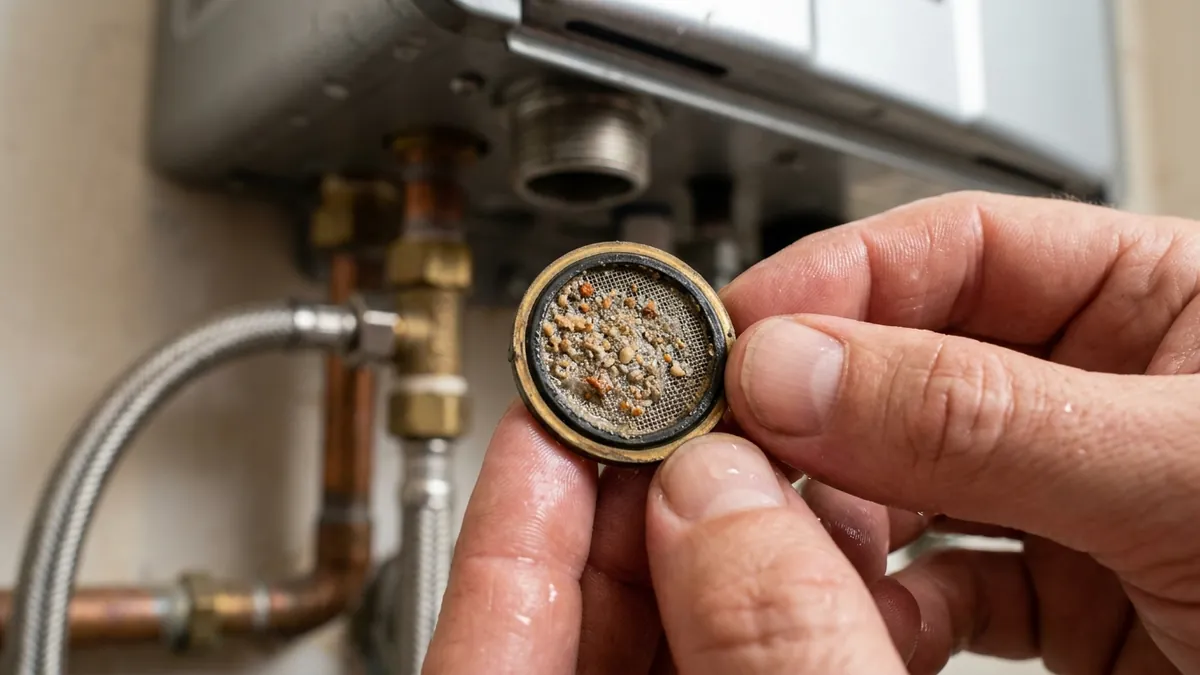
Check power and gas first. With both present, the likely culprits are a dirty inlet screen, low flow, a failed flow sensor or ignition trouble. In Richmond, after a hard freeze also check whether the condensate line has frozen, since many condensing models shut down when it blocks.
Why does my tankless heater alternate between hot and cold?
A short burst of cool water right after you reopen a tap is the heater relighting. If the temperature swings while the water keeps running, suspect flow under the minimum the heater needs, scale in the exchanger or a weak flow sensor. Around Richmond the winter supply is likely near 36°F, which limits a typical gas unit to roughly 4.3 gallons per minute at 120°F, so a swing that only happens with several taps open is usually that limit.
Do tankless water heaters have a reset button?
Most reset by cycling the power or through the control panel. Resetting clears the code but not the underlying problem; ignition or exhaust codes that return call for a repair visit.
Restore Hot Water in Richmond
Call (888) 987-0567 with your heater's make and code, and you'll get the likely problem and an estimated range on that first call.