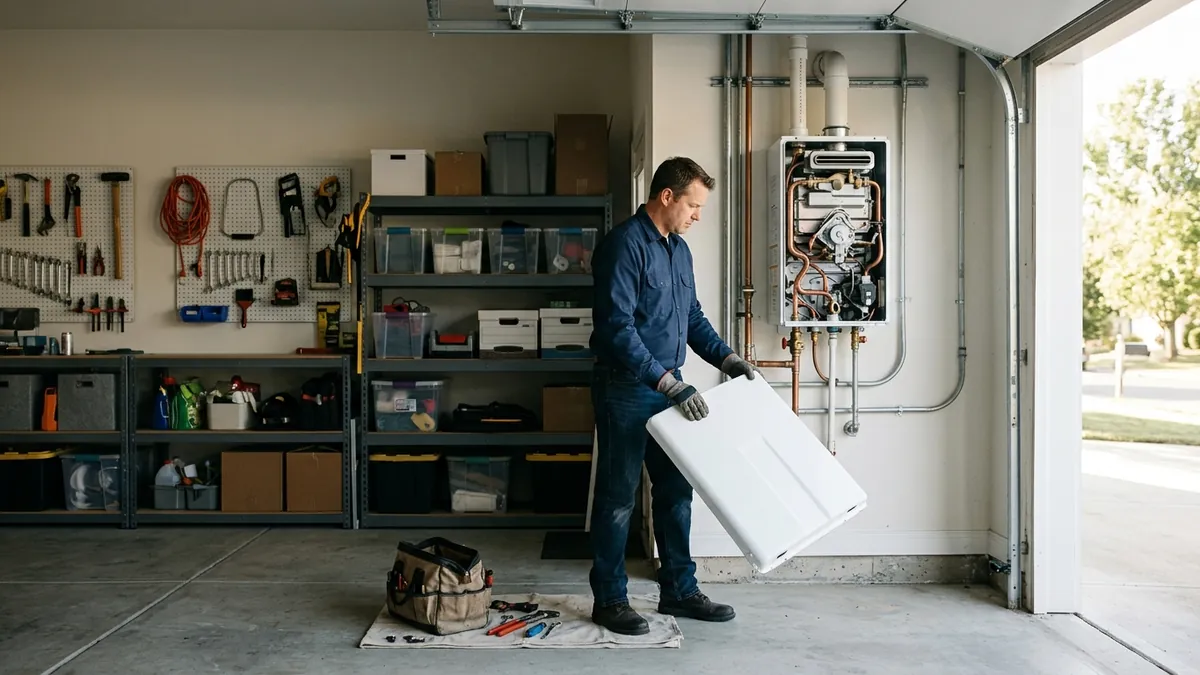
Tankless Water Heater Repair in Washington, NC
Tankless water heater repair in Washington, NC for gas-fired and electric on-demand heaters. We trace the fault, explain it in plain words, and run every hot tap in the house before calling the job done.
- Fault log checked first
- You approve the price before work
- Descaling through isolation valves
Diagnosis before parts
We confirm what failed by testing it, so you never pay for a guess or a part that wasn't needed.
You approve the cost
The repair and its price are spelled out on paper, and work begins only after you say yes.
Technicians near you
The person at your door works your area and repairs on-demand heaters week in, week out.
Only tankless repair
No tank heaters, no remodels. Gas and electric on-demand units are the whole job.
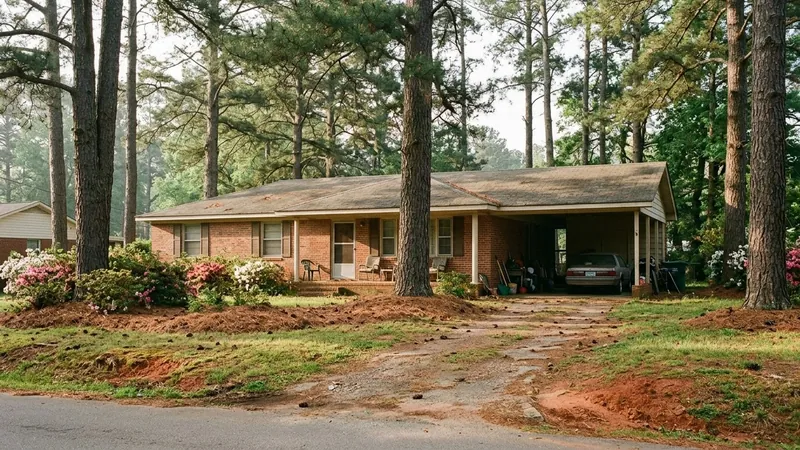
What Washington Does to a Tankless Heater
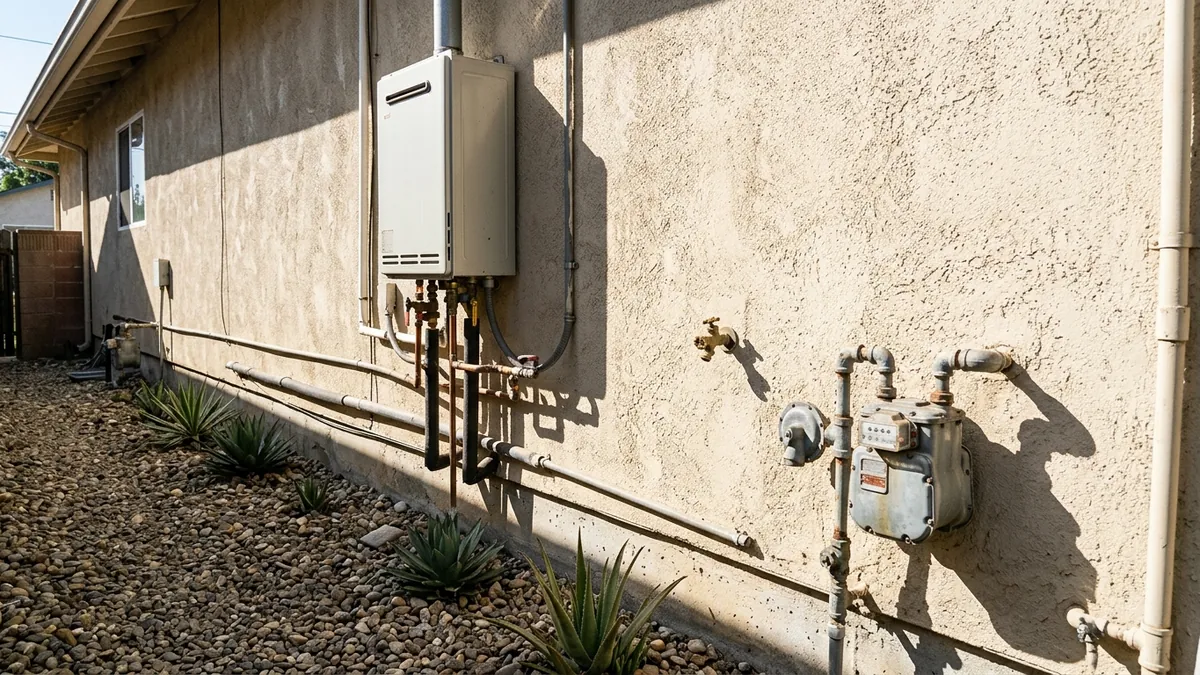
Washington has plenty of brick ranches, where the tankless hangs outside on a wall or in the garage. Most calls trace to undersized gas supply or one of the occasional hard freezes.
Local factors in Washington
- Winter freezes. A deep freeze can burst the lines that supply a heater. The built-in freeze protection does its job only as long as it has electricity and gas.
- Older-home retrofits. Retrofit jobs are common in this area. If flame codes appear only while the furnace or the dryer is running, we look at the gas supply before anything else.
All Washington ZIP codes (27889) fall within our coverage.
Call (888) 987-0567Tankless Trouble We See in Washington
Most tankless water heater repair in Washington, NC calls trace back to one of the faults below, and the code on the panel usually narrows it down.
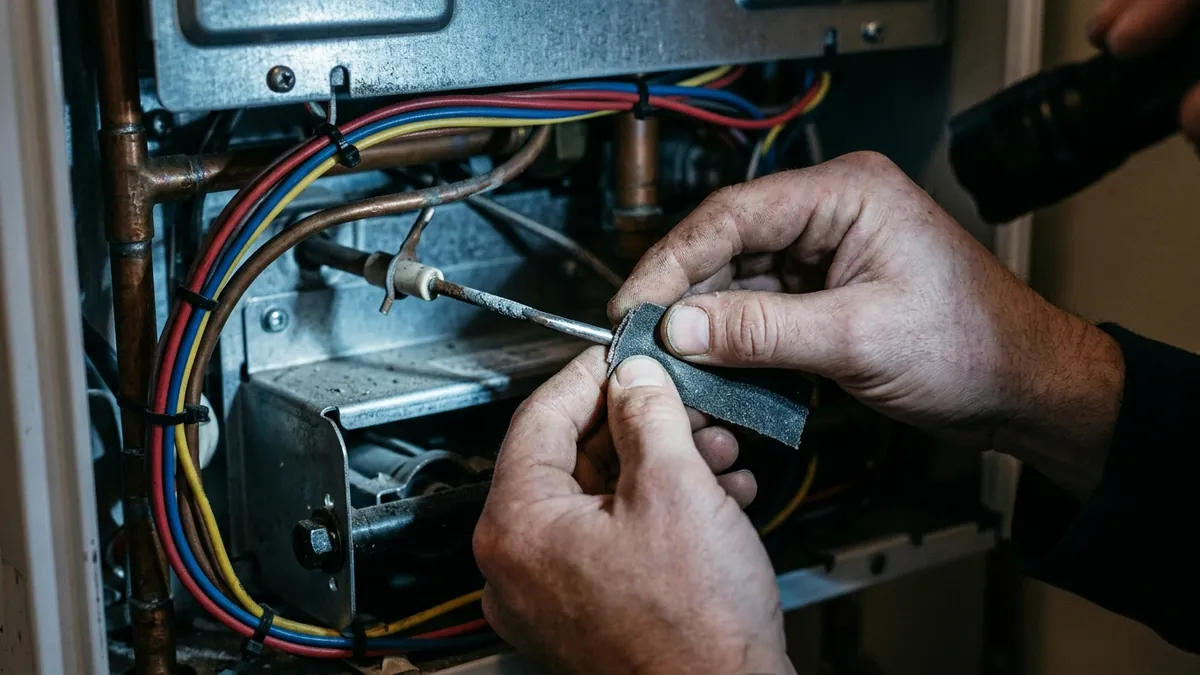
No-ignition code (11, E003, 111)
A no-ignition code points to low gas pressure, a sooted flame rod, a tired igniter or a vent obstruction, and we test each.
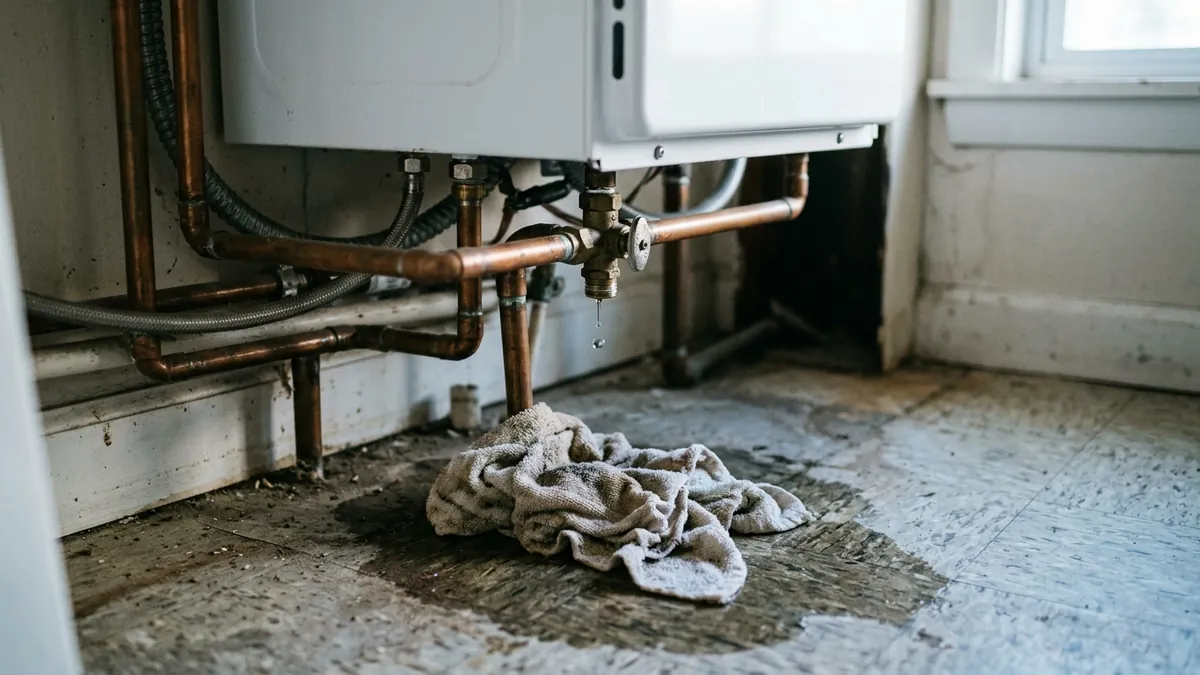
Puddle below the heater
Leaks start at service valves, pipe joints, the pressure relief valve, the condensate drain or a cracked exchanger.
Code 10 or E110 on the panel
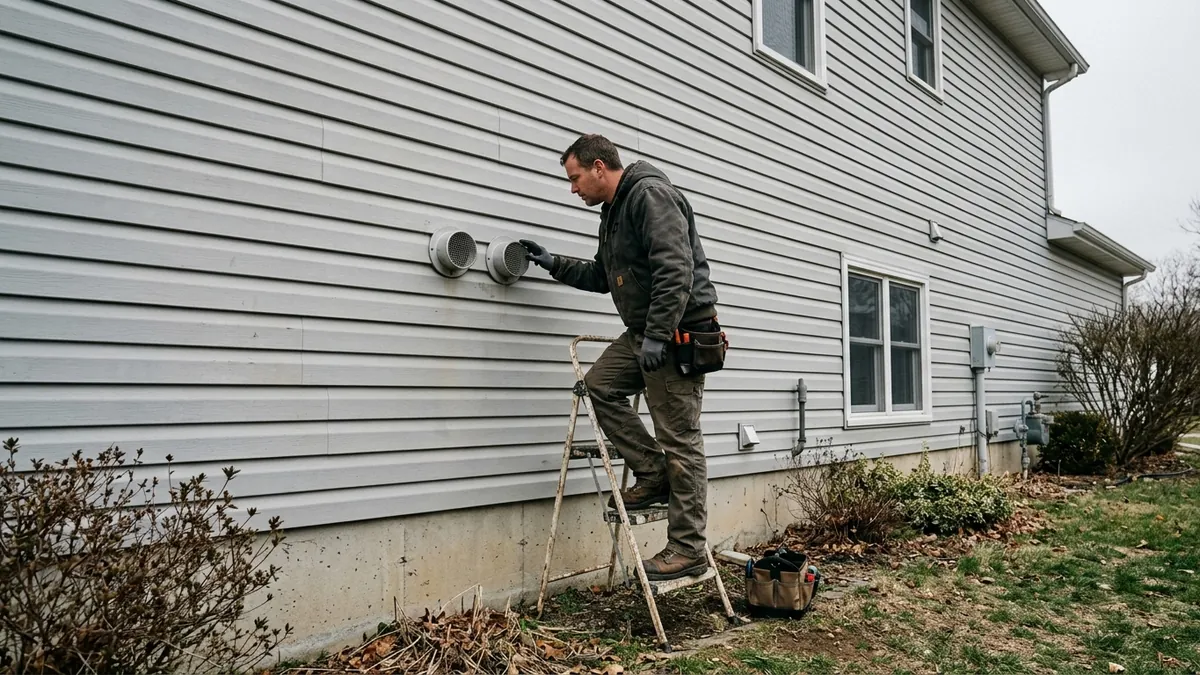
A venting code means the heater can't move air: a blocked cap, a bird or wasp nest, drifted snow or an overlong vent.
Water isn't as hot anymore
Mineral scale in the exchanger, a gas supply that sags, or a temperature sensor giving a false reading.
Only one faucet runs cold
Typically a worn mixing cartridge or a crossover at that fixture, rather than the heater itself.
Nothing on the display
The outlet has lost power, a fuse has blown, or the control board has failed.
Not sure which of these it is? Describe the symptoms on the phone and we'll tell you what it most likely is.
Keep It Running or Replace It in Washington?
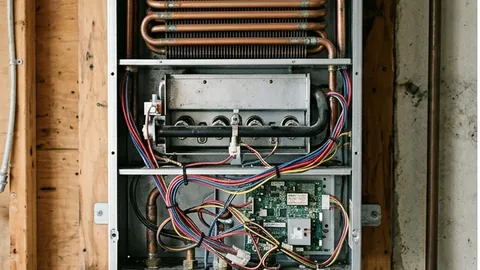
A gas tankless heater that gets regular flushes often keeps going for two decades or more, so one bad part almost never justifies a new unit. Once a heater is past 15 years and its exchanger fails without warranty coverage, replacement starts to make more sense.
When you call (888) 987-0567, mention the make, the approximate age and what the heater is doing. If a repair isn't worth the money, we'll say so plainly.
Call (888) 987-0567What a Tankless Fix Costs in Washington
Descaling by itself is estimated at $150–$350, and most tankless water heater repair in Washington, NC involving a part runs an estimated $150–$800. A replacement heat exchanger is the large exception, estimated at $1,000–$2,500.
Diagnostic visit
- Intake and exhaust caps inspected
- Label age and serial recorded
- Burner gas pressure tested while firing
Component repair & descale
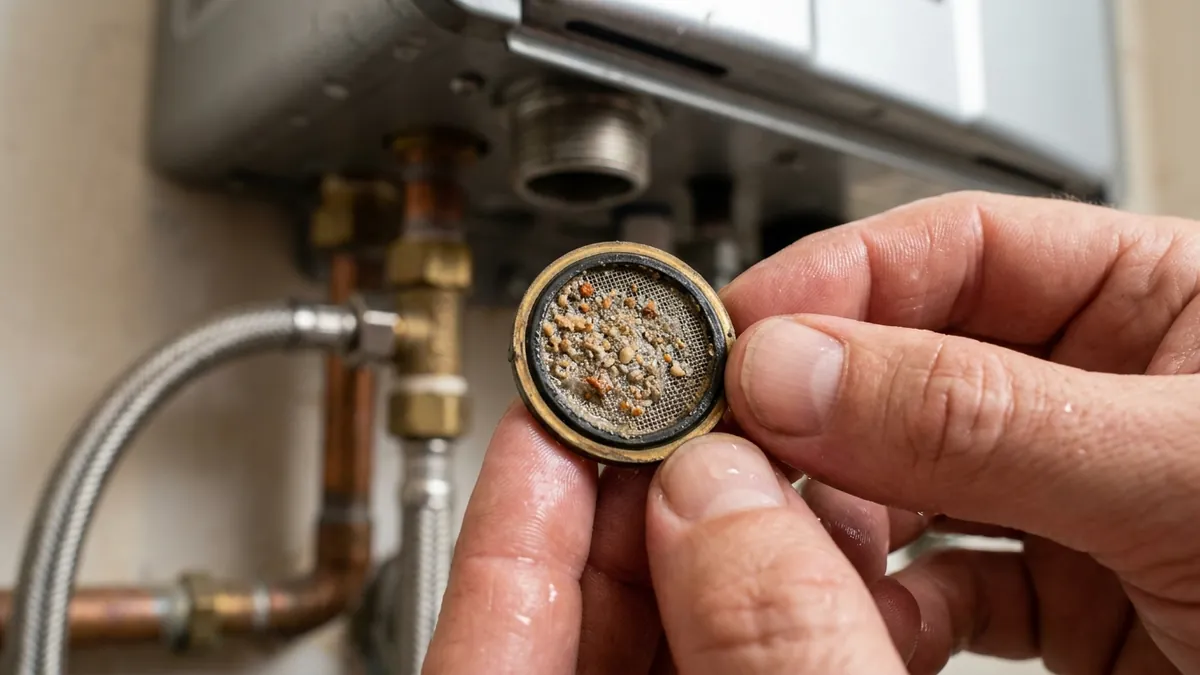
- Inlet screen rinsed clean
- Flow sensor diagnosed and replaced
- Service valves fitted for future flushes
Exchanger & major components
- Cracked or leaking exchanger swapped
- Gas valve or control board changed
- Maker's parts warranty checked first
Book Tankless Water Heater Repair in Washington, NC Now
Every cycle on a scaled or misfiring heater adds wear. Book now while the fix is still a simple one.
Housing in Washington at a Glance
About 47% of homes here heat with gas and about 53% with electricity, so a tankless fault in Washington can sit on the burner side or the element side depending on the house. Homes in Washington have a median build year of 1970, long before tankless heaters caught on in the U.S., so many units here are retrofits, and the gas sizing, venting and drain work done for a retrofit is often where a repair begins. Owner-occupied homes make up about 51% of the total and single-family houses about 69%, a mix that means tankless problems get reported by owners in some homes and by landlords or tenants in others.
At roughly 1,191 people per square mile (about 9,754 residents on 8.2 square miles), Washington is fairly spread out, mostly detached houses on bigger lots, where a tankless unit is commonly mounted in a garage or on an outside wall. Our North Carolina coverage list has 301 communities, and this one is number 79 among them by population.
Figures: 2019-2023 five-year American Community Survey estimates for Washington, NC, published by the Census Bureau.
Washington Weather and Water Temperature
Freezing nights are not constant in Washington, about 30 a year, but the coldest one in the last three years reached about 16°F. A unit mounted outdoors or in an unheated garage is exposed on those nights, and a leak found in spring often started in January.
In Washington the cold tap is probably around 53°F in winter and 72°F in summer, based on a January average of 43°F, a July average of 81°F and a yearly average of 63°F. Heating that water to 120°F takes a rise of about 67°F in winter, so a 199,000 BTU gas unit at 90% efficiency tops out near 5.4 gallons per minute, compared with roughly 7.5 in summer when the rise is only about 48°F.
Since a shower uses about 2 gallons per minute, that winter ceiling is why a heater that handles one shower easily can run lukewarm when a second shower and the dishwasher start. Lukewarm water at full demand is a limit of the design, not always a fault, whereas lukewarm water at a single tap points to scale, a sensor or an ignition problem.
Weather: NASA POWER daily temperatures, 2021-2023, for the grid cell around Washington, NC, corrected to the town's elevation (USGS). Tap-water temperatures and flow rates are estimates, not measurements.
ZIP Codes We Cover in Washington
All Washington ZIP codes (27889) fall within our coverage.
- 27889
Close-by cities
Tankless Water Heater Repair in Washington, NC: FAQs
Still unsure?
Phone us and describe what the unit is doing. A tankless tech can usually narrow it down while you are on the line.
Call (888) 987-0567What does tankless water heater repair in Washington, NC cost?
Depending on which part failed, most repairs run an estimated $150–$800. Expect an estimated $150–$350 for a stand-alone descale and an estimated $1,000–$2,500 for a replacement heat exchanger. Freeze damage is priced once we see what cracked, since no two splits are alike.
What is the typical lifespan of a tankless water heater?
Gas units that get regular flushes often last two decades or more. Electric models usually manage somewhere around 7 to 10 years of service. In Washington the heat exchanger works through a rise of about 67°F on a typical winter day, which is why flushing on schedule matters there.
Why won't my tankless water heater turn on?
First make sure the outlet has power and the gas valve is open. If both check out, look at low flow, a plugged inlet screen, a bad flow sensor or trouble in the ignition circuit. In Washington, after a hard freeze also check whether the condensate line has frozen, since many condensing models shut down when it blocks.
How often does a tankless water heater need flushing?
Most manufacturers recommend once a year, or every six months where the water is very hard. Soft-water homes can go longer, but years without a flush lead to scale faults. Because Washington rarely freezes (roughly 30 nights a year), the flush can be scheduled whenever it is convenient.
Restore Hot Water in Washington
Call (888) 987-0567 with your heater's make and code, and you'll get the likely problem and an estimated range on that first call.
Speak With a Tankless Tech in Washington
Around Washington
ZIP codes 27889, and the surrounding parts of Beaufort County.
Browse North Carolina