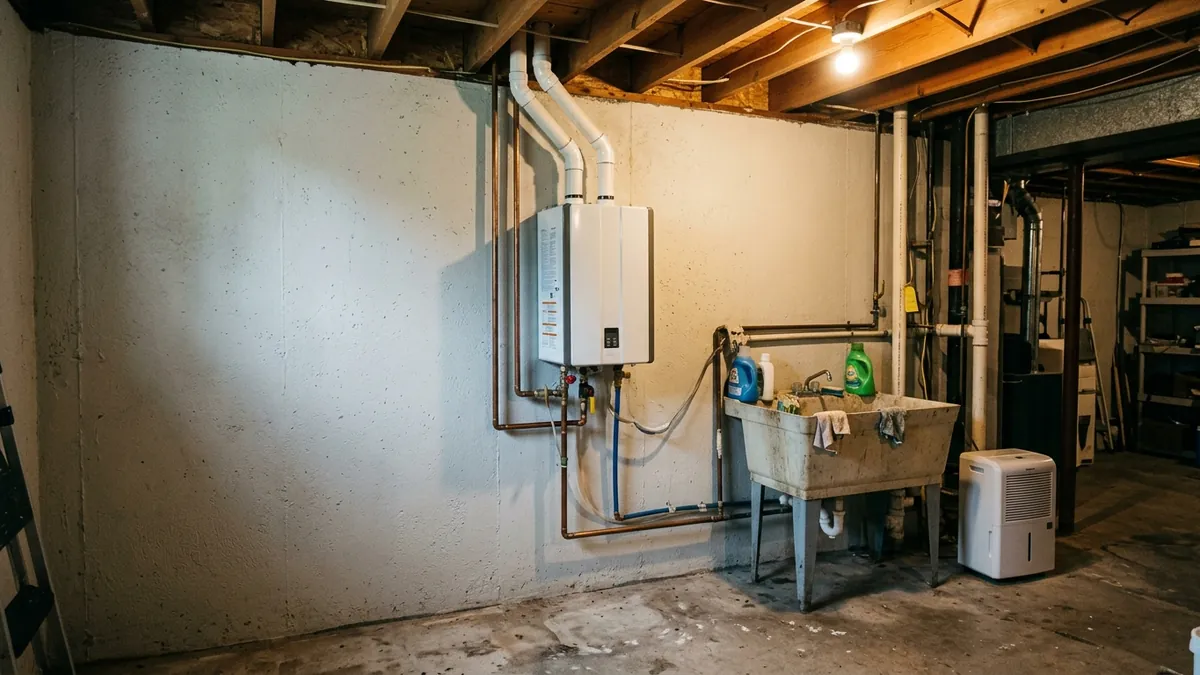
Tankless Water Heater Repair in Waynesville, OH
Tankless water heater repair in Waynesville, OH, step by step: the fault log is pulled, gas pressure is checked while the burner fires, flow and the inlet screen are inspected, and only the bad part gets changed.
- Every hot tap tested at the end
- Fault log checked first
- Gas and electric models
Diagnosis before parts
We confirm what failed by testing it, so you never pay for a guess or a part that wasn't needed.
You approve the cost
The repair and its price are spelled out on paper, and work begins only after you say yes.
Technicians near you
The person at your door works your area and repairs on-demand heaters week in, week out.
Only tankless repair
No tank heaters, no remodels. Gas and electric on-demand units are the whole job.
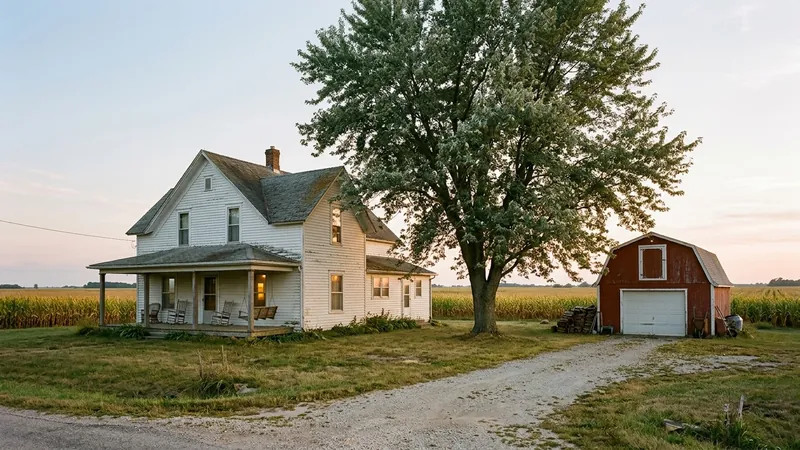
What Waynesville Does to a Tankless Heater
Waynesville homes typically put the tankless downstairs near the furnace, where cold winters and hard water slowly wear it down.
Local factors in Waynesville
- Basement heaters. Lots of heaters here sit in the basement, vented with PVC through the rim joist, and their condensate needs a proper place to drain.
- Winter freezes. Overnight power outages during cold snaps are what cause damage locally; after each hard freeze we repair frozen lines and cracked fittings beneath heaters.
- Mineral-heavy water. Minerals in the local supply come out of solution and coat the exchanger. Overheat faults, LC codes and showers that never get properly hot frequently begin right there.
All Waynesville ZIP codes (45068) fall within our coverage.
Call (888) 987-0567Tankless Trouble We See in Waynesville
Most tankless water heater repair in Waynesville, OH calls trace back to one of the faults below, and the code on the panel usually narrows it down.
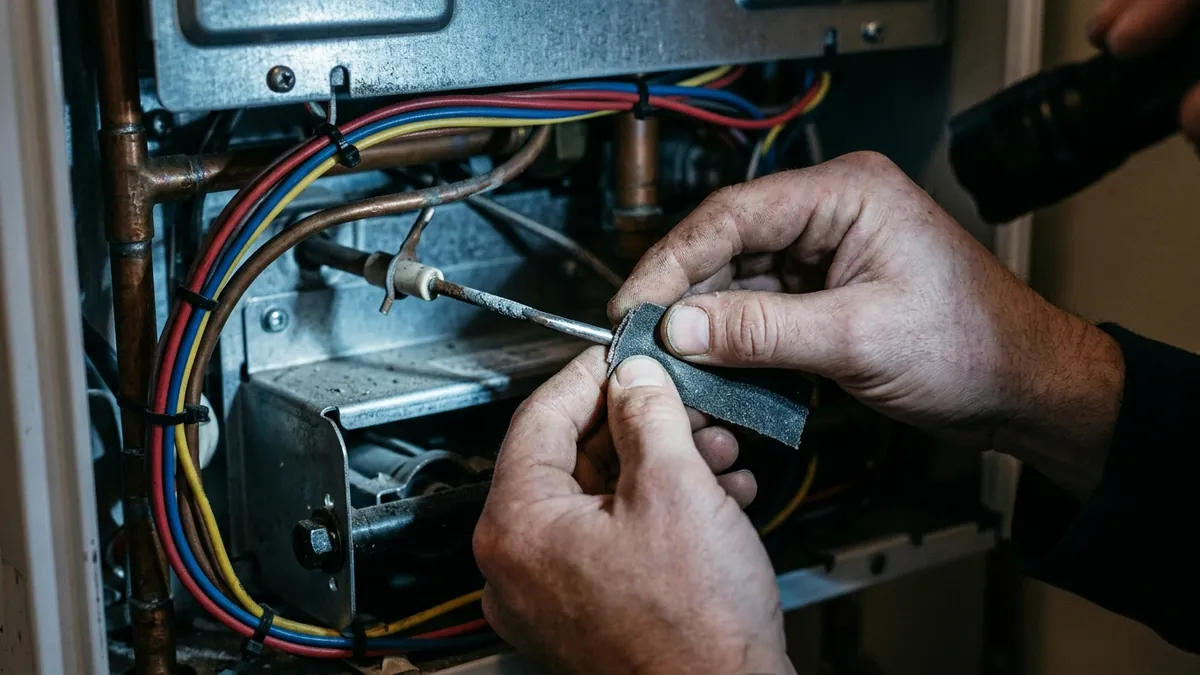
No-ignition code (11, E003, 111)
A no-ignition code points to low gas pressure, a sooted flame rod, a tired igniter or a vent obstruction, and we test each.
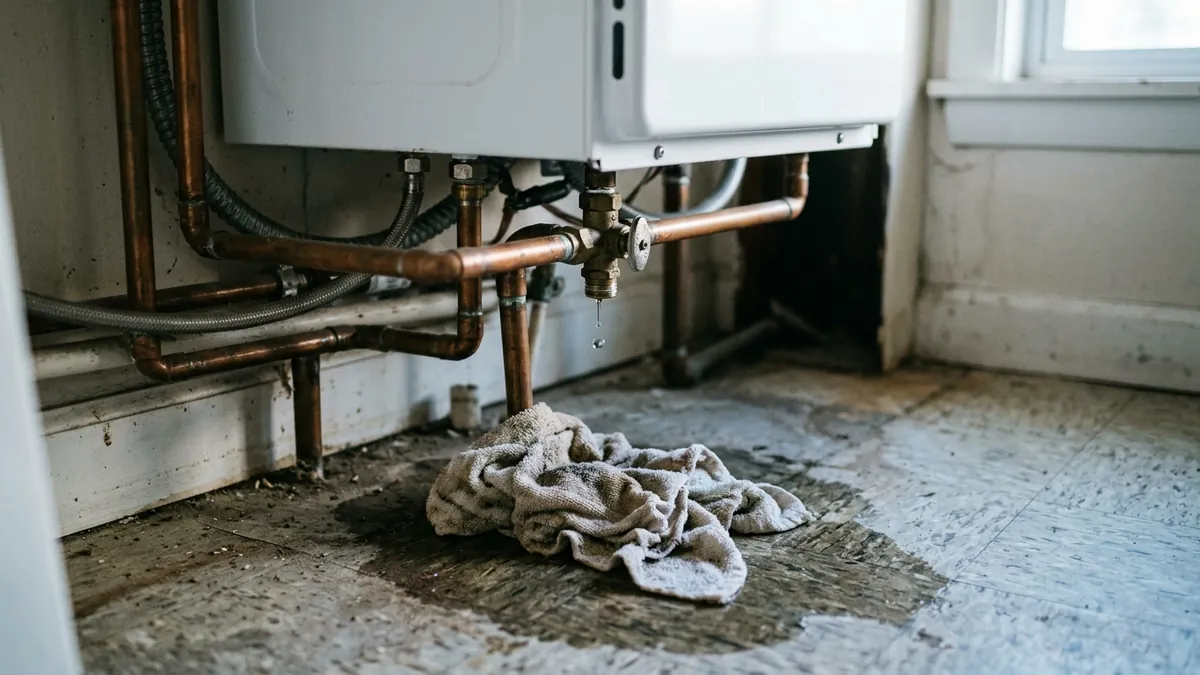
Puddle below the heater
Where the water comes from decides the bill: a valve or a joint is minor, a failed exchanger is not.
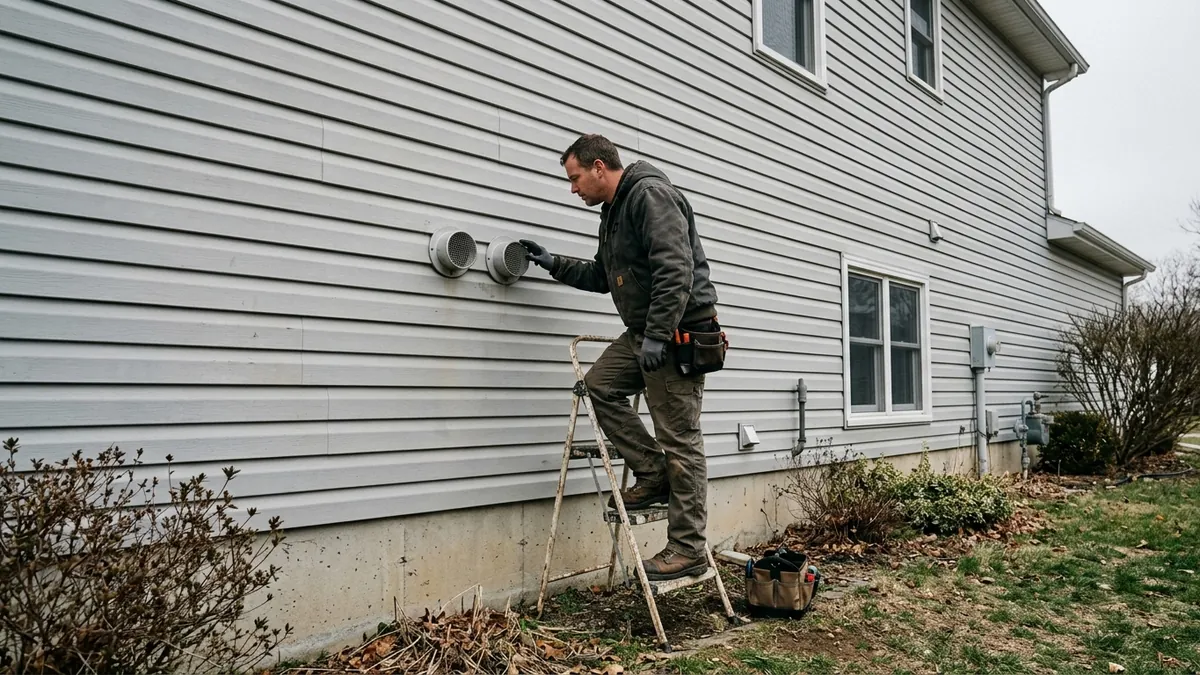
Air supply or exhaust fault
A venting code means the heater can't move air: a blocked cap, a bird or wasp nest, drifted snow or an overlong vent.
Rinnai showing LC
That's the scale warning. The exchanger is due for a descale, and it shouldn't wait long.
Nothing on the display
The outlet has lost power, a fuse has blown, or the control board has failed.
Whistling or rumbling
Mineral scale, a laboring fan or a gas regulator problem, all of which testing will reveal.
Not sure which of these it is? Describe the symptoms on the phone and we'll tell you what it most likely is.
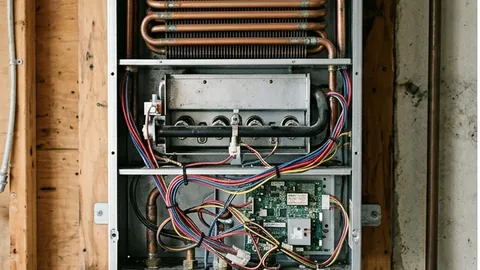
Keep It Running or Replace It in Waynesville?
A gas tankless heater that gets regular flushes often keeps going for two decades or more, so one bad part almost never justifies a new unit. Once a heater is past 15 years and its exchanger fails without warranty coverage, replacement starts to make more sense.
Can't decide? Phone (888) 987-0567 with the make, the manufacture date from the rating label and the code. We'll tell you whether fixing it is worthwhile before any visit is booked.
Call (888) 987-0567What a Tankless Fix Costs in Waynesville
When the fix is a flow sensor, an igniter, a flame rod or a flush, tankless water heater repair in Waynesville, OH typically runs an estimated $150–$800. Swapping the exchanger is the bigger job, at an estimated $1,000–$2,500.
Diagnostic visit
- Burner gas pressure tested while firing
- Label age and serial recorded
- Fault codes and log reviewed
Component repair & descale
- Every hot tap tested after the fix
- Flow sensor diagnosed and replaced
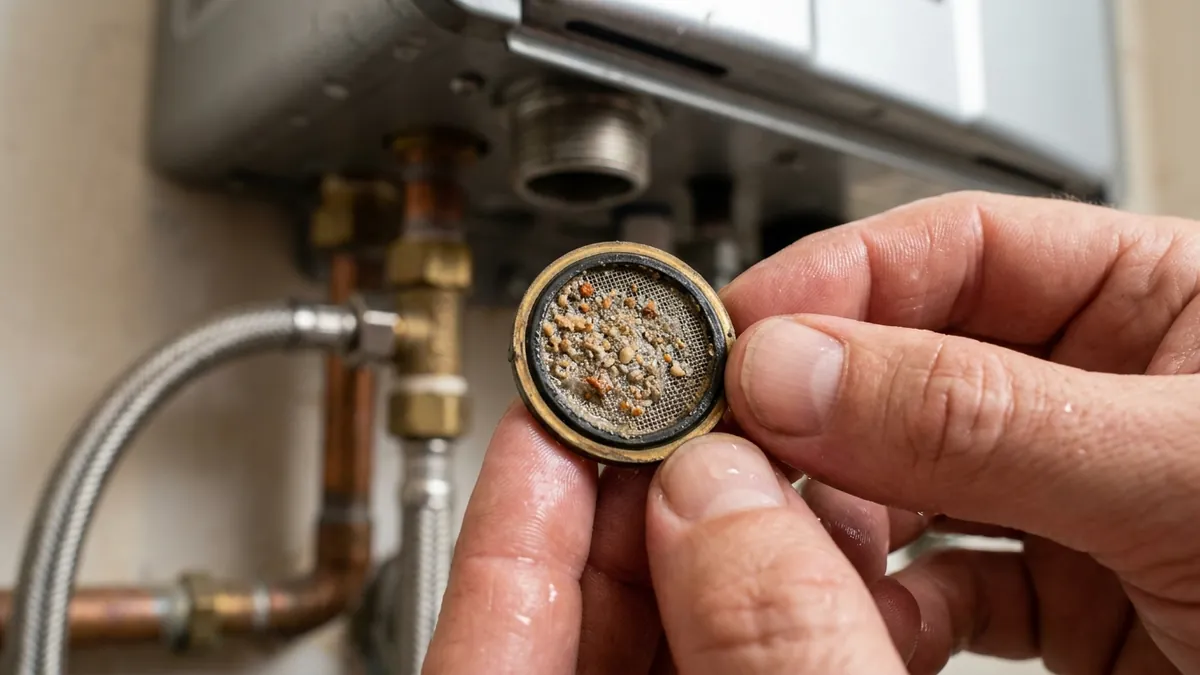
- Inlet screen rinsed clean
Exchanger & major components
- Cracked or leaking exchanger swapped
- Straight talk when the unit isn't worth fixing
- Blower motor replaced
Get Tankless Water Heater Repair in Waynesville, OH Today
Caught early, most faults come down to a small part. Left alone, they can grow into a bigger repair.
Housing in Waynesville at a Glance
Waynesville leans on gas, with roughly 73% of households heating with it. Where gas lines are that common, gas tankless models are probably the norm, and their usual trouble spots are ignition, supply pressure and the flue. Half the housing here predates 1978, when homes were piped and vented for tank heaters; a tankless unit added later often needed a larger gas line, a new vent path or a condensate drain, and those add-ons are frequent starting points for a fault. Waynesville has an owner-occupancy rate near 66% and about 73% single-family housing, so most tankless repair calls likely come straight from the homeowner.
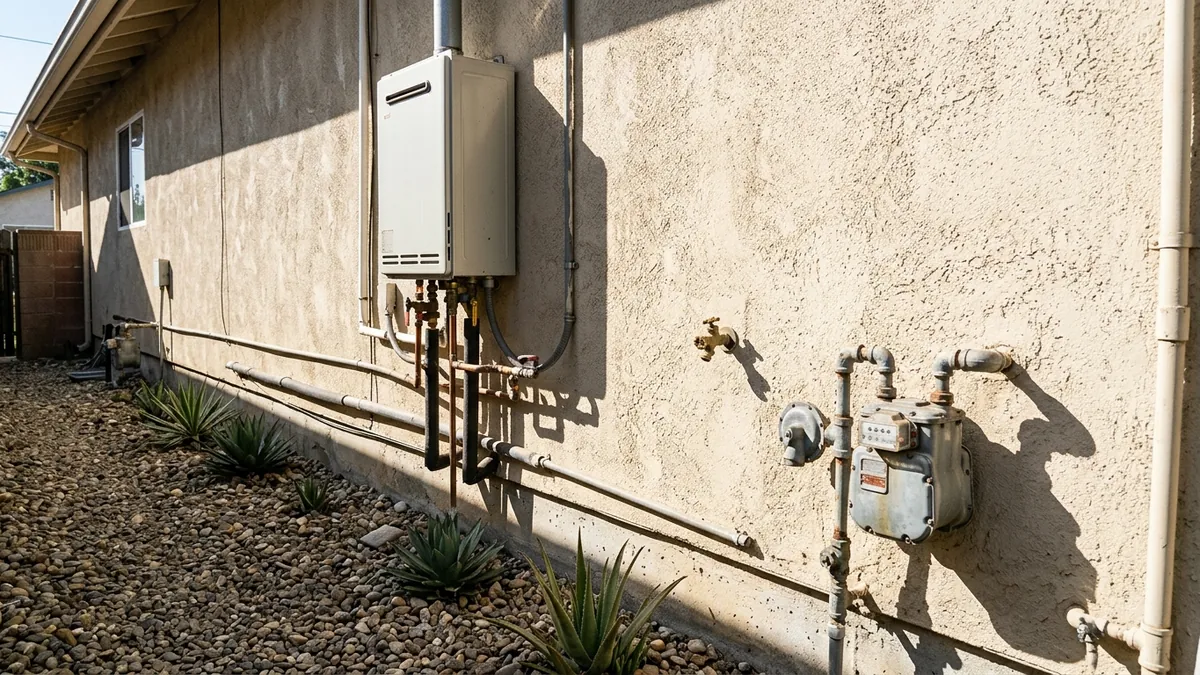
At roughly 1,154 people per square mile (about 2,723 residents on 2.4 square miles), Waynesville is fairly spread out, mostly detached houses on bigger lots, where a tankless unit is commonly mounted in a garage or on an outside wall. By population it is number 188 of the 452 Ohio communities on our coverage list.
Figures: 2019-2023 five-year American Community Survey estimates for Waynesville, OH, published by the Census Bureau.
Waynesville Weather and Water Temperature
Waynesville sees about 110 nights a year at or below freezing, and the coldest night of the last three winters fell to -5°F. Where that is normal, exposed water lines, condensate drains and outdoor vent terminations are the parts that fail first, and a heater with no freeze protection or a power cut is a real risk.
In Waynesville the cold tap is probably around 42°F in winter and 65°F in summer, based on a January average of 30°F, a July average of 75°F and a yearly average of 54°F. Heating that water to 120°F takes a rise of about 78°F in winter, so a 199,000 BTU gas unit at 90% efficiency tops out near 4.6 gallons per minute, compared with roughly 6.5 in summer when the rise is only about 55°F.
For comparison, a shower draws roughly 2 gallons per minute, so two at once plus the dishwasher can pass the winter figure. If the water goes lukewarm only when several taps run, the unit is likely maxed out; if it goes lukewarm at one tap, the cause is more often scale, a flow sensor or the flame.
At about 839 ft above sea level, Waynesville is below the roughly 2,000 ft mark where manufacturers usually begin to adjust gas appliance ratings, so altitude is not a factor for most tankless units here.
Weather: NASA POWER daily temperatures, 2021-2023, for the grid cell around Waynesville, OH, corrected to the town's elevation (USGS). Tap-water temperatures and flow rates are estimates, not measurements.
ZIP Codes We Cover in Waynesville
All Waynesville ZIP codes (45068) fall within our coverage.
- 45068
Close-by cities
Tankless Water Heater Repair in Waynesville, OH: FAQs
Still unsure?
Phone us and describe what the unit is doing. A tankless tech can usually narrow it down while you are on the line.
Call (888) 987-0567What does tankless water heater repair in Waynesville, OH cost?
Depending on which part failed, most repairs run an estimated $150–$800. Expect an estimated $150–$350 for a stand-alone descale and an estimated $1,000–$2,500 for a replacement heat exchanger. Where the water is hard, a descale is often added to the repair and listed on the same quote.
How often does a tankless water heater need flushing?
Annually for most homes, twice a year with very hard water. Soft water allows a longer gap, but don't let it go for years. With roughly 110 freezing nights a year in Waynesville, early autumn is a sensible time for the flush: the unit is about to carry its heaviest winter load.
What is the typical lifespan of a tankless water heater?
Gas models often run 20 years or longer with regular flushing. Electric tankless heaters tend to give 7 to 10 years before a replacement makes more sense. In Waynesville the heat exchanger works through a rise of about 78°F on a typical winter day, which is why flushing on schedule matters there.
Why does my tankless heater alternate between hot and cold?
A short burst of cool water right after you reopen a tap is the heater relighting. If the temperature swings while the water keeps running, suspect flow under the minimum the heater needs, scale in the exchanger or a weak flow sensor. In Waynesville, with winter tap water near 42°F, a gas unit can hold 120°F for about 4.6 gallons per minute, and opening a second tap past that point is a common cause of the swing.
Restore Hot Water in Waynesville
Call (888) 987-0567 with your heater's make and code, and you'll get the likely problem and an estimated range on that first call.